Part Two: The Architects of Distraction — How Your Phone Knows You Better Than You Know Yourself
On doomscrolling, data harvesting, and the quiet drift away from God
"The thief comes only to steal and kill and destroy."
John 10:10
The thief, in 2026, does not break down your door.
He does not announce himself.
He arrives in your pocket, softly glowing, and he asks for only a moment of your time.
The Machine Behind the Scroll
To understand what is happening to your attention and by extension, your spiritual life you have to understand something most people never think about: the feed you are looking at was built specifically for you.
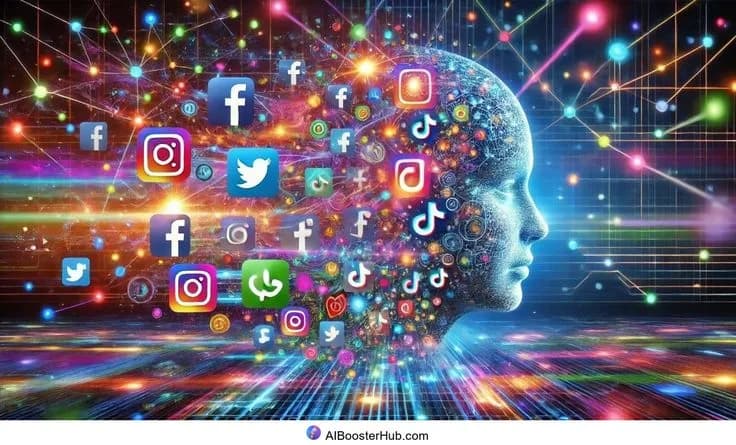
Not for people like you. Not for your demographic or age group. For you. Your specific thumbprint of fears, curiosities, desires, loneliness, and humour. The scroll you are doomscrolling was assembled, in real time, by algorithms that have been studying you sometimes for years with a patience and precision that no human being in your life has ever matched.
This is not a conspiracy theory. This is the documented, openly acknowledged business model of the modern internet.
And it is worth sitting with the full weight of that sentence before we move on.
How They Built the Machine: A Brief History of Engineered Addiction
In the early days of social media, the feed was chronological. You saw what your friends posted, in the order they posted it. Simple. Passive. Relatively harmless.
Then the engineers noticed something: chronological feeds made people leave.
When there was nothing new, users closed the app. And a closed app generates no revenue. So the teams at Facebook first, then Twitter, then Instagram, then every platform that followed began experimenting. What if the feed wasn't chronological? What if it showed you what you were most likely to engage with?
Engagement, in the language of Silicon Valley, is a polite word. What it actually means is: what will make you feel something strong enough that you cannot look away? And that right there is what engineers spend sleepless nights to figure out.
They discovered, quickly and with billions of data points to confirm it, that the strongest engagement drivers are:
- Outrage. Content that makes you angry keeps you scrolling longer than content that makes you happy.
- Fear. Threatening information triggers a survival response that overrides the prefrontal cortex the part of your brain responsible for choosing to put the phone down.
- Incompleteness. A story with no ending. A headline with no resolution. A video that cuts off at the moment of highest tension. The brain hates unresolved loops. It will scroll to close them.
- Social validation signals. Likes. Shares. Comments. The variable reward schedule sometimes you get them, sometimes you don't is chemically identical to a slot machine. B.F. Skinner demonstrated this with pigeons in 1948. Silicon Valley rediscovered it with humans in 2008.
These were not accidental discoveries. They were researched, tested, refined, and deployed at planetary scale. The result is a media environment designed, from its foundations, to be stronger than your willpower. Not most people's willpower. Everyone's.
Doomscrolling: The Name for What Was Always Happening
The term doomscrolling entered common language around 2020, during the early months of the Covid pandemic, when millions of people found themselves unable to stop consuming catastrophic news late into the night even as it made them progressively more anxious and unable to sleep.
But the behaviour itself is older than the word. It is the natural endpoint of an attention economy built on fear and outrage.
Here is what happens neurologically when you doomscroll:
Your amygdala the brain's threat-detection centre registers danger in the content. A headline about economic collapse. A video of conflict. A statistic about disease. The amygdala signals: stay alert. Don't stop watching. You need to know if this threat is coming for you.
This triggers cortisol release. Your stress response activates. Your heart rate elevates slightly. Your body enters a low-grade state of vigilance that feels, paradoxically, like urgency a sense that you need to keep going, keep reading, keep knowing.
And then the feed delivers the next piece of content.
And the next.
And you are caught in a physiological loop that the algorithm is actively feeding, because your elevated engagement signals — the longer you stay, the more you scroll, the slower your exit — tell the machine: this is working. Give more.
Twenty minutes pass. Then forty. Then an hour. You did not decide to spend an hour in a state of low-level cortisol poisoning before bed. You simply could not find the edge of the scroll.
The Spiritual Anatomy of Doomscrolling
Now here is the part that matters most for the person who was trying to read their Bible.
The state that doomscrolling produces anxious, vigilant, overstimulated, emotionally reactive, attention fractured into dozens of unresolved threads is the precise opposite of the state that scripture requires.
Consider what the Bible repeatedly asks of the reader. Be still. Selah the musical notation in the Psalms that means: pause. breathe. let that land. The Sermon on the Mount unfolds slowly, layer upon layer, assuming a listener who is sitting on a hillside with nowhere to be. The book of Lamentations asks you to sit with grief, not scroll past it. Job asks you to stay in the dark rather than reach for easy answers.
Every deep encounter with scripture the kind that changes a life, that stays with a person for decades requires a quality of attention that is slow, receptive, open, and still.
Doomscrolling produces a person who is fast, reactive, closed, and restless.
These are not compatible states. You cannot move from forty minutes of algorithmically curated outrage directly into the Beatitudes and expect to receive them fully. The soil of your attention has been compacted. The seed lands on hard ground.
The Profile They Have Built of You
Now we go deeper. Because distraction is only the surface layer. Beneath it is something more architectural the vast, invisible infrastructure of personal data that these platforms have built around every user.
When you downloaded TikTok, Instagram, Facebook, or any major social platform, you agreed to terms of service. Almost nobody reads them. But inside those documents sometimes hundreds of pages long is permission for these companies to collect an extraordinary range of information about you.
Here is what they collect. Not hypothetically. Actually.
What you do inside the app:
- Every video you watch, and for exactly how long
- Where you pause, rewind, or replay
- What you skip in the first three seconds
- What you watch to completion
- What you share and what you merely looked at
- What you type and then delete before sending
That last one is worth sitting with. On several platforms, keystrokes inside the text box are logged even if you never hit send. The thought you had but decided not to express they captured it.
What your device tells them:
- Your precise GPS coordinates, sometimes updated every few minutes
- The other apps installed on your phone
- Your battery level and charging habits (used to infer location and routine)
- The Wi-Fi networks you connect to (which maps your physical locations)
- Your device's microphone and camera usage patterns
- Your contacts list, on many platforms
What your behaviour tells them:
- What time you wake up (first phone check of the day)
- What time you go to sleep (last phone check of the night)
- Whether you sleep consistently or erratically
- Your emotional state, inferred from your content consumption patterns
- Whether you are in a relationship, and approximately how it is going
- Whether you are anxious, lonely, grieving, or celebratory
- Your political leanings, your religious activity, your financial situation
In 2018, a researcher named David Stillwell found that Facebook's algorithm could predict a person's personality traits openness, conscientiousness, emotional stability more accurately than their closest friends, using only their like history. With enough data, the algorithm outperformed the person's spouse.
The machine knows you. Not in the way a friend knows you, with warmth and history and love. But in the way a predator knows its prey — with cold, pattern-based precision, updated in real time, optimised for extraction.
The Profile Versus the Shepherd
There is a verse in John 10 where Jesus says: "I know my sheep and my sheep know me."
The word know in that passage in the original Greek, ginōskō means an intimate, experiential, relational knowing. The kind of knowing that grows through presence and time and love. The shepherd knows each sheep by name, by gait, by the particular sound of its distress.
Now hold that image next to the platform's profile.
Both know you. But they know you for entirely different purposes. One knows you in order to lead you toward rest, toward water, toward safety. The other knows you in order to keep you in the feed to show you the content most likely to hold your attention, regardless of whether it is nourishing you or hollowing you out.
The algorithm does not care if you are well. Wellness does not generate engagement. The algorithm cares if you are hooked. And it has, over years of studying you, assembled a more detailed map of your psychological vulnerabilities than any human adversary could.
How They Know Your Steps
The phrase "know your steps" is almost literal.
Your phone's accelerometer tracks your physical movement. Combined with GPS data, this allows platforms to know not just where you are but what you are doing. The pattern of movement associated with sitting still is different from walking. Walking is different from driving. Sitting in a church pew produces a particular movement signature.
Facebook's patent filings which are public documents describe methods for inferring user emotions from typing speed and pressure. For inferring socioeconomic status from photo metadata. For predicting when a user is about to make a major life decision, and targeting advertisements accordingly.
Google's location history, if enabled, stores a record of every place you have physically visited, often for years. It knows which church you attend. Which hospital you visited and how long you stayed. Which neighbourhood you drove through at 11 p.m. The route you take to work and how it changed when you switched jobs.
This data is then used to build what the industry calls a psychographic profile — not just who you are but how to move you. Which emotional levers to pull. Which fears to activate. Which desires to amplify. All in service of keeping your thumb moving on the glass.
The philosopher Shoshana Zuboff called this surveillance capitalism an economic logic in which human experience itself is the raw material, harvested, processed, and sold. Your attention is not the product you consume. Your attention is the product being sold. You are not the customer. You are the resource.
The Slow Drift From God
Here is where all of this converges into the spiritual.
The drift from God that happens through a screen does not usually announce itself. There is no single morning where a person wakes up and decides to be less devoted. There is no dramatic falling away. There is, instead, a gradual reorientation of attention so slow and so continuous that it is almost invisible until you look back across months or years and wonder how you got so far from where you used to be.
It works like this:
The first displacement is time. The hours that were once available for prayer, for reflection, for sitting quietly with scripture, are colonised slowly, incrementally by the feed. Fifteen minutes here. Thirty minutes there. An hour before sleep that used to be quiet. The person doesn't feel like they have abandoned their devotional life. They feel like they simply haven't had time. The time was taken. They gave it willingly, but they did not know what they were agreeing to.
The second displacement is desire. The algorithm, having studied you, knows how to make the feed feel more urgent than the Bible. It is not that it makes the Bible seem unimportant. It is that it makes the scroll seem necessary there is always something breaking, something trending, something that needs to be seen now. Scripture, which is patient and eternal, cannot compete with now on now's own terms. And so it waits. Quietly. Unopened.
The third displacement is inner quiet. This is the most serious one. The practice of prayer of sitting in silence, of turning inward, of listening for a voice that does not shout requires a nervous system that has been allowed to settle. Doomscrolling, by flooding the body with low-grade cortisol and training the brain to expect constant stimulation, makes silence feel unbearable. The person who sits down to pray finds themselves reaching for their phone within sixty seconds not because they want to, but because the absence of stimulation has become a sensation their body now reads as distress.
They are not walking away from God. They are being slowly trained to be unable to stay still long enough to find Him.
The Room Where God Speaks
The prophet Elijah, in a state of complete exhaustion and despair, went out and stood on a mountain before the Lord. What followed is one of the most important passages in all of scripture about the nature of divine communication:
"Then a great and powerful wind tore the mountains apart and shattered the rocks before the Lord, but the Lord was not in the wind. After the wind there was an earthquake, but the Lord was not in the earthquake. After the earthquake came a fire, but the Lord was not in the fire. And after the fire came a gentle whisper."
— 1 Kings 19:11–12
A gentle whisper.
Not the trending topic. Not the breaking news. Not the notification banner or the viral video or the outrage that ten million people shared today. After all of that — after the wind and the earthquake and the fire comes the voice. Quiet. Patient. Easily missed.
The person whose attention has been engineered toward noise cannot hear a whisper. Not because God has gone silent, but because the room inside them has been filled, so gradually and so completely, that there is no longer any space for quiet to exist.
What Repentance Looks Like in the Digital Age
The word repentance in Greek is metanoia a turning of the mind. A change of direction. Not a feeling of guilt, but a reorientation.
In the digital age, metanoia may look like:
Deleting the apps that only serve distraction. Not all apps. The ones that you open compulsively, without intention, and close feeling worse than when you opened them. You know which ones they are.
Auditing your screen time with honesty. The Screen Time feature on iOS and Digital Wellbeing on Android will show you numbers that are difficult to look at. Look at them anyway. Then ask: if I spent these hours in prayer, in scripture, in silence who would I be by now?
Treating your phone like a tool, not a companion. A hammer does not go everywhere with you. A wrench does not sleep next to your bed. The phone has become a companion in a way that no tool should be and that intimacy is precisely what makes it so effective at displacement.
Fasting from the feed. One day a week, or one morning a day, or one hour before sleep a designated period of no scroll. Not to punish yourself. To remember what it feels like to be fully in your own life. The discomfort of the first few days of a digital fast is, itself, data. It tells you something true about how deep the hook has gone.
Rebuilding the room where God speaks. Silence is a spiritual discipline. It is not the absence of noise it is the practice of creating conditions in which the whisper can be heard. This takes time to rebuild once it has been eroded. Be patient with yourself. The algorithm took months to hollow the room out. You will not restore it in a weekend.
A Final Reckoning
The companies that built these platforms are not evil in the cartoonish sense. They are human beings, many of them brilliant, who were solving an engineering problem and following the money. But the system they created the attention economy, the surveillance infrastructure, the psychographic profiling, the algorithmically engineered feed has produced effects on human interior life that are, by any honest assessment, catastrophic.
We are more anxious than any generation in recorded history. We are more distracted. We are lonelier, despite being more connected. We have less capacity for deep thought, for sustained attention, for sitting with discomfort without reaching for a screen. We are, in the language of the therapist, dysregulated.
And into this dysregulated life, we try to bring the words of a God who speaks in whispers.
The good news and there is always good news is that attention is not permanently lost. It is trainable. The brain that was rewired toward distraction can be patiently rewired back toward stillness. The inner room that was colonised by the feed can be reclaimed, one quiet morning at a time.
But it requires choosing. Every day, in small ways, choosing the whisper over the wind.
Choosing the worn pages over the glowing screen.
Choosing to be known by the Shepherd rather than profiled by the machine.
End of Part Two
Part One: "It All Starts With a Single Download" the convenience, the first distraction, the gentle erosion
Part Two: "The Architects of Distraction" — the engineering, the data, the drift
Coming: Part Three — "Finding our Way Back"