You are walking faster than usual.
Not because of rain you checked the sky before leaving the church compound and it was clear, that particular shade of Nairobi blue that makes the whole afternoon feel washed and open. Not because you are late for anything. Not because someone is waiting.
You are walking faster because of something you heard.
Something that seemed small on the surface. But is not small at all underneath.
Something about oil.
Something about what has been sitting on your kitchen counter for years possibly every year of your adult life that you have never once stopped to think about.
And now you cannot stop thinking about it.
The Sabbath That Did Not End the Way You Expected
You had not planned to stay.
Sabbath service had ended the way it always does the final hymn still settling in the air like something that needed a moment before it left, people rising slowly from the pews, conversations opening at the door, laughter scattered across the compound in small warm clusters. Nobody rushes on Sabbath afternoon. That is the whole point. Time does not push you. You move the way water moves — easy, unhurried, going where it goes.
You were already thinking about home. About what was in the pot from Friday. Whether the rice would reheat well. Whether the afternoon called for soya or something cold. Small, comfortable, ordinary thoughts.
But someone mentioned a health talk.
Not dramatically. Not with a printed invitation or a microphone announcement. The way someone might mention that the mango tree on the other side of the building has ripe fruit. Just casually you might find it helpful.
And something in you, not urgency and not exactly curiosity, more like a quiet pull, made you turn around.
So you stayed.
The Room That Had a Different Quality
The hall had been rearranged. A projector at the front. Chairs in loose rows. People settling in ones and twos, some with Bibles open out of habit, even though this was not a Bible study. There is something about Adventists and health education it does not sit apart from faith here. It sits right beside it. The body as temple is not just a verse quoted and set aside. It is a daily practice. A reason to pay attention to things most people never think twice about.
You take a seat in the middle. Not so close that you look eager. Not so far that you cannot see the screen. The middle is honest. The middle says: I am here. I am open. But I am not yet sure.
You look around. Maybe thirty people. Some have notebooks already open, pens ready, the kind who write things down before anything worth writing has been said. Others lean slightly forward, elbows on their knees, the posture of someone who has already decided to pay attention before a single word has been spoken.
The room is quieter than the compound. More intentional. There is a stillness you cannot fully name — the kind that collects when something meaningful is about to happen, even before anyone knows what that thing is.
The projector hums.
A slide appears.
Two Images That Changed Everything
The first image is an artery.
Wide. Smooth. Clean as a new pipe. You can almost feel blood moving through it — the way water moves through a clear hose with nothing in its way, easy and full of space, working without effort. It looks the way health is supposed to look when health is just quietly doing its job.
Then the next slide.
Same artery. Different story entirely.
Narrowed — the walls pressing inward from both sides as though something has been building against them, quietly, for years, never asking permission. The channel that was once generous is now tight and forced. And along the inner walls, pale fatty deposits cling in layers, the way grease builds on a pan that was not quite washed properly the first time, and then not quite the second time, and eventually you stopped noticing because it had simply always been there.
You shift in your seat.
Not because you are uncomfortable. Because you are paying attention now in a way you were not twenty seconds ago.
The speaker stands calmly to the side of the screen. Not performing composure — actually composed, the way a person is composed when they know their subject so thoroughly they do not need volume to make a point. She is not trying to frighten anyone. She does not need to. The images are doing that work on their own.
Words You Had Never Really Thought About
She begins explaining what happens to oil under industrial processing and repeated high heat.
And this is when you realise the talk is not going to be what you expected.
You had come for general things. Drink more water. Eat more fruit. Reduce salt. True things. Important things. The kind of advice that is so familiar it enters through one ear and exits quietly through the other before you have finished nodding, because you already know it, and knowing it has not changed much.
But this is not that. This is specific. This has teeth.
She explains how oil, when subjected to industrial processing, undergoes structural changes. The chemical bonds that held it in its natural form begin to break and rearrange into new compounds — compounds the body does not recognise the way it recognises something that came from a tree, from soil, from a living source. And when the body encounters something it cannot fully identify as food, it reacts. Sometimes with inflammation. Sometimes by storing what it cannot process. Sometimes by doing nothing visibly wrong for years, and then one day, suddenly, doing something very wrong indeed.
You are writing now. Faster than you expected to be.
Hexane. A solvent. Used in large-scale oil extraction to pull every last molecule of oil from seeds and plant material. Efficient. Thorough. Then supposedly removed — supposedly.
Refining. A word that sounds like improvement. But industrial refining means stripping oil of the very compounds that made it food — its colour, its smell, its flavour, its natural antioxidants, its biological depth. What remains is stable. Consistent. And less alive.
Bleaching. Not by sunlight. By chemical agents — bleaching earths, activated carbon — that absorb and remove the pigments and polyphenols, the colour compounds that gave unrefined oil its character. The oil emerges paler. More uniform. Easier to sell to a consumer trained to believe that pale and uniform means clean and safe.
Deodorising. Steam-distilling the oil at temperatures between 180 and 230 degrees Celsius to drive off any remaining volatile compounds — the molecules responsible for smell and flavour. Because after everything it has been through, the oil smells wrong. So the smell is removed. And with it go the last traces of anything that once connected this liquid to a living plant. What you are left with is an oil that smells like absolutely nothing. Yesterday you would have called that neutral. Today it sounds like something has been erased.
Trans fats. A phrase you have heard in the context of danger without ever fully understanding. Partially hydrogenated structures the body handles poorly. Linked to exactly the kind of arterial buildup you just saw on that slide.
You are still writing.
Then the speaker says something that stops your pen completely.
She says it without drama. Without decoration. The way you state a fact that is so true it does not need anything added to it:
"What you cook with… becomes part of what flows through you."
You stop writing.
Because that sentence does not need notes. It needs the few seconds of silence it takes for a true thing to travel from your ears to somewhere deeper than your mind.
Your kitchen — that ordinary room where you make ordinary food on ordinary mornings — is suddenly connected to your blood. To your energy. To the way your heart does its quiet work at two in the morning when you are asleep and not thinking about any of this. To whether those arteries, the ones on the screen, will look like the first image or the second image twenty years from now.
And the oil on your counter is part of that story.
A Question Nobody Could Answer Honestly
She continues.
She explains cholesterol not as a villain but as a system — the body producing and managing something it genuinely needs, until what it is asked to process every single day stops resembling what it was designed to handle, and the balance slowly tips. Buildup happens quietly. Damage is invisible. You do not feel an artery narrowing. You do not feel inflammation accumulating at the cellular level. You feel fine. You feel completely fine — right up until you do not.
Then she asks the room:
"Do you know what your cooking oil has gone through before it reaches your pan?"
Silence.
Not the silence of people thinking carefully. The silence of people realising, for the first time, that they have never asked this question. That the oil arrives in its bright container with its confident label and its reasonable price and it has simply never occurred to anyone to wonder what happened between the seed and the shelf.
The answer, for almost everyone in the room, is simply — no.
Then, gently, without fanfare:
"Coconut oil. The real kind."
You look up.
Something in the way she says the real kind catches you — that small distinction, quiet but important, the way there is a difference between saying a friend and saying a real friend. You understand immediately that a line is about to be drawn between two things that share a name but are not the same thing.
She explains the fat structure. Coconut oil is rich in medium-chain triglycerides — shorter fatty acid chains the body processes more directly, converting them to energy more readily rather than storing them first and asking questions later. She talks about lauric acid, a specific medium-chain fatty acid making up nearly half of coconut oil's composition — the same fatty acid found in significant quantities in one other place in nature: human breast milk. The body knows this molecule. It has been working with it since before you could walk. It carries natural antimicrobial properties. It does not just fuel — it protects.
She mentions polyphenols. Anti-inflammatory plant compounds. Present in real, unprocessed coconut oil. Largely gone from the refined versions.
You write: Lauric acid. Medium-chain fats. Polyphenols. Antimicrobial.
You do not fully understand every word yet. But you know they are pointing at something real. Something worth understanding.
And something shifts in you. Not loudly. Quietly — the way light changes in a room when someone opens a curtain you did not know was closed.
The Chapati That Made It Real
After the session, chairs scrape back, voices return, and from the kitchen at the back of the hall comes a smell.
Warm dough on a hot pan. That familiar, deeply Kenyan smell — the smell of chapati, which is the smell of home, of Sabbath lunch, of someone who got up early and meant it.
You take one from the plate. It is warm in that perfect second stage — still soft and pliable, no longer scorching, the kind of warm you can actually taste rather than just endure. You tear it the way you always tear chapati — pulling a strip from the edge, the inside layers separating slightly, each one thin and soft.
You take a bite.
And you stop.
There is something different. Something you cannot name immediately. You chew slowly, paying attention the way you rarely pay attention to food you have eaten a thousand times.
There is richness — but not the heavy kind. Not the kind that coats your throat and makes you feel satisfied before you have finished your first piece. This is a clean richness. Full-bodied without being thick. Like the difference between a voice that fills a room naturally and one being pushed through a speaker turned too high — one belongs there, the other is only pretending to.
There is a faint depth — something almost sweet, but not sweet like sugar. Sweet like the ingredient itself, like something the oil brought with it from wherever it came from before it was oil. And there is no greasiness. Not on your fingers. Not on the roof of your mouth. Soft without being oily. Flavourful without being heavy.
You walk over to the woman who served it.
"What oil did you use?"
She smiles — not like someone waiting to be asked. Like someone who knew the answer was going to matter.
"Coconut oil."
You look at the chapati in your hand. Tear another strip. Taste it again — now knowing what you are tasting.
And everything the speaker said becomes not just information but experience. Not just words in a notebook but something you can feel in your mouth, something that has moved from your head into your body. The knowing is different now. The kind that stays.
Sunday Morning: The Supermarket Aisle
The next day, you are in Naivas.
The wide aisles. The organised shelves. The fluorescent lights that make everything look clean and reliable and permanent, the way supermarket lighting always does — as if nothing on these shelves has a complicated history, as if everything here arrived simply and honestly and is exactly what it appears to be.
Your feet carry you to the cooking oil aisle.
It is long. Longer than you remembered, or maybe you just notice it more now. Shelf after shelf of bottles and tins — yellow containers, gold-labelled containers, containers printed with sunflowers and smiling families and confident health claims. The colours are cheerful. The fonts are bold. Everything about the packaging says: this is what everyone uses, this is obviously fine, there is nothing to think about here.
But you are thinking.
You pick up a bottle of sunflower oil. Transparent golden liquid, clear as window glass. The label says: Rich in Vitamin E. Heart healthy. Pure and refined.
Refined.
Yesterday that word was neutral. Today it sounds like a quiet admission.
You set it back.
You pick up a vegetable blend. Sunflower, soya, palm — mixed, processed, stabilised, designed to be consistent across every bottle produced in every batch every week of every year. Designed for the shelf. Designed for the price point. Designed to ask nothing of you except that you stop thinking.
You think about deodorising. About oil being heated past 200 degrees to burn away its own smell — because after everything it has been through, it no longer smells the way food should smell. You are holding the result of that process. It smells like nothing. And yesterday you called that neutral.
Today you are calling it something else.
You set it back and walk further down the aisle.
The Coconut Oil Section — And the Question Behind the Label
You find it near the end. Several brands. Several sizes. Coconut oil has had its moment in the health world, so the supermarket stocks it now — lined up neatly, each jar wearing its best labels.
You pick up the first one.
Cold pressed. Extra virgin. 100% pure coconut oil. The design is clean. A small coconut graphic. The oil inside is white and solid — coconut oil solidifies below about 24 degrees, and Nairobi mornings are cool enough for that. It looks right. It looks natural.
You read the back. Cold pressed from fresh coconuts. No additives. No preservatives.
You turn it in your hand.
And something hesitates inside you.
Not because you doubt coconut oil itself — you heard enough yesterday to trust the ingredient. The hesitation is about the label. About something the speaker mentioned almost as an aside, the kind of thing that sounds small when you first hear it and grows larger the more you think about it:
"Even terms like cold pressed and extra virgin are not always strictly regulated."
You look at the words again.
Cold pressed means the oil was extracted by mechanical pressure without additional heat during pressing. Better than solvent extraction, yes. But it says nothing about what happened after pressing — whether the oil was then refined, bleached, deodorised — all of which can legally happen to a cold-pressed oil and leave those two words on the label completely intact.
Extra virgin is borrowed from olive oil, where it carries a strictly defined international meaning. For coconut oil, there is no equivalent standard. Any manufacturer can print it because it sounds like purity. It sounds like the first press, the best press, the one where nothing went wrong and nothing was taken away. But there is no one checking.
100% pure simply means it is not blended with other oils. It says nothing at all about how it was processed.
These are not lies. They are words selected for the feeling they create, not the information they convey. And the feeling they create — of something close to the source, something natural and uncompromised — is often more complete than the reality behind the label.
You put the jar in your basket. It is still better than the sunflower oil. But you are carrying a different question now. Not which brand is best.
But what does oil that has never seen a factory at all actually look like?
The Oil That Is Made, Not Manufactured
Now hold all of that and imagine something completely different.
Not a factory floor. Not a processing line. Not a committee deciding which claims will read best on packaging.
Imagine a kitchen — or a backyard, or a small workspace where the windows are open and the smell of coconut is so present in the air that it simply is the air. A place where no machine is doing what a human hand can do better. Where oil is not manufactured but made — the way food was always made before food became an industry.
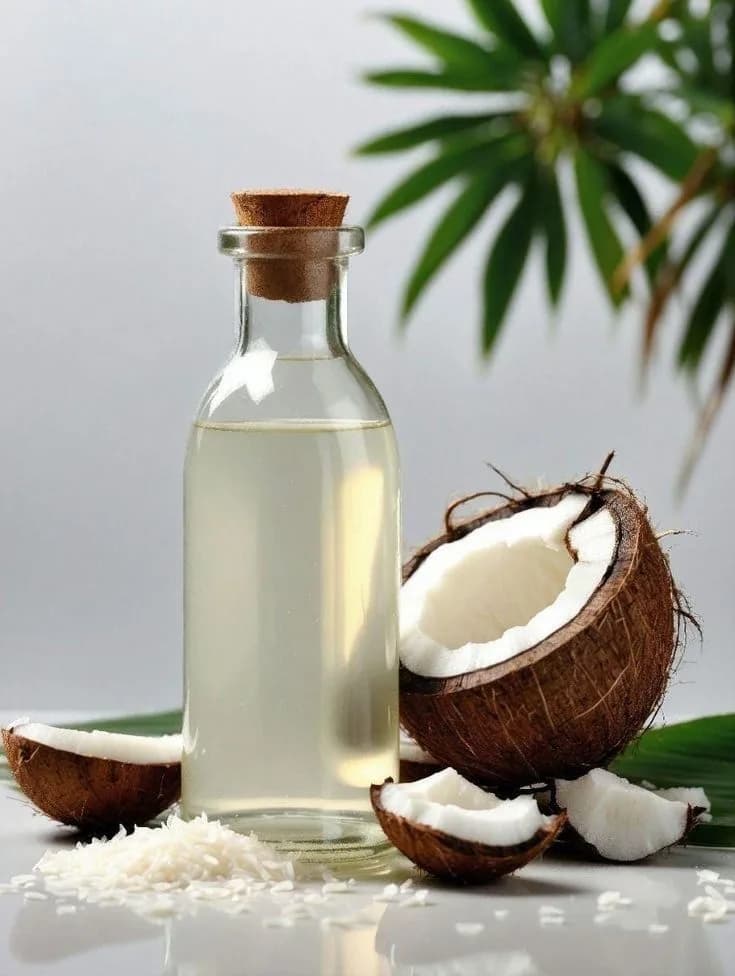
It begins with a fresh coconut.
Not dried. Not stored for weeks. Freshly opened — the kind where, the moment the shell cracks, a smell rises that is clean and faintly sweet and unmistakably alive, the kind of smell that tells you immediately you are dealing with something that was recently a living thing and has not had that quality processed out of it. The white flesh inside is firm and moist, still holding its oils close. Hold a piece in your warm hand and it begins releasing oil within seconds. That is how ready it is.
The flesh is grated — finely, by hand, on a traditional grater, producing a soft fragrant mass that looks like damp snow and smells like every good quality of a coconut concentrated into a single sensation. It is already, at this stage, clearly food. Not raw material. Not input. Food, the kind that came from something living and is heading somewhere nourishing without losing the thread between those two things.
Then warm water is worked through the grated flesh — hands pressing and squeezing in slow rhythmic motions, coaxing the oil out of the solid material until it flows as thick, white coconut milk. This milk is everything. It is the full natural emulsion of coconut oil and coconut water and every polyphenol, every antioxidant, every aromatic molecule that makes a coconut what it is. All of it, suspended together, waiting.
Then the milk is left alone.
Set aside. Undisturbed. Time is given space to do what no machine can replicate. Oil, lighter than water, rises slowly toward the surface. Water settles. Solid residue sinks. Across several hours, three distinct layers form without any force applied — a thick oil-rich cream on top, clear coconut water in the middle, sediment at the bottom. No centrifuge. No chemicals. No hurry.
Just time.
And if gentle heat is needed to finish the separation — to evaporate the last of the moisture from the cream layer — it is exactly that: gentle. Not 200 degrees. Not the kind of heat that destroys. The kind your grandmother would call careful. The kind applied by someone watching, adjusting, responding — someone who is paying attention because this is not a production line, it is a craft.
Finally, cloth.
The oil is poured through clean cloth, which catches what remains of the solid material and lets the oil through — warm, clear, running freely, smelling exactly like what it is.
Not like nothing.
Like a coconut.
Like a coast. Like a tree that stood in actual sunlight and produced actual fruit and was opened by actual hands.
What sits in the container now will not look identical to the last batch. The coconuts were slightly different. The day was slightly different. Living things vary — and that variation is not a flaw to be corrected. It is evidence that nothing has been standardised out of existence.
What Your Body Actually Receives
This is where the difference stops being interesting and becomes important.
Real, unrefined coconut oil carries its lauric acid intact — the medium-chain fatty acid that the body processes efficiently, converts to energy readily, and uses partly as protection, not just fuel. It carries its natural antioxidants — compounds that protect cells from the slow oxidative damage that accumulates over years of eating food that no longer contains its own defences. It carries its polyphenols, with their anti-inflammatory properties that refined oil has had bleached and deodorised away.
And it carries its full medium-chain triglyceride profile — fat that goes to the liver for conversion to energy rather than first to fat tissue for storage, fat the body handles with recognition rather than suspicion.
Refined coconut oil still contains fat. Still functions as cooking oil in every technical sense. But what made the fat biologically interesting — what made it more than just calories — has largely been removed in the name of consistency, shelf life, and a label that looks reassuring.
The trade-off is real. It is just rarely printed next to the smiling family on the front of the bottle.
The Question That Has Changed
You are back in your kitchen.
The jar from Naivas is on the counter. The label still says cold pressed and extra virgin. You are not going to throw it away — that is wasteful, and your faith does not encourage waste.
But you are holding a different question now.
The question used to be: which oil should I buy?
The question now is: what has this oil been through before it reaches the people I am cooking for?
Because you are not only cooking for yourself. You cook for your family. For your children or your siblings or your parents, who are getting older and whose arteries are doing their quiet, invisible work every hour of every night without anyone paying them much thought. You cook for Sabbath guests. For the people whose health is, in some real and accumulating way, connected to the choices you make in that ordinary kitchen.
The oil choice happens every day. It accumulates silently. It becomes, across months and years and decades, part of what flows through the people you love.
Where to Find the Real Thing
If you have read this far, you are probably asking the question you would ask at the end of any good health talk:
Where do I actually get this?
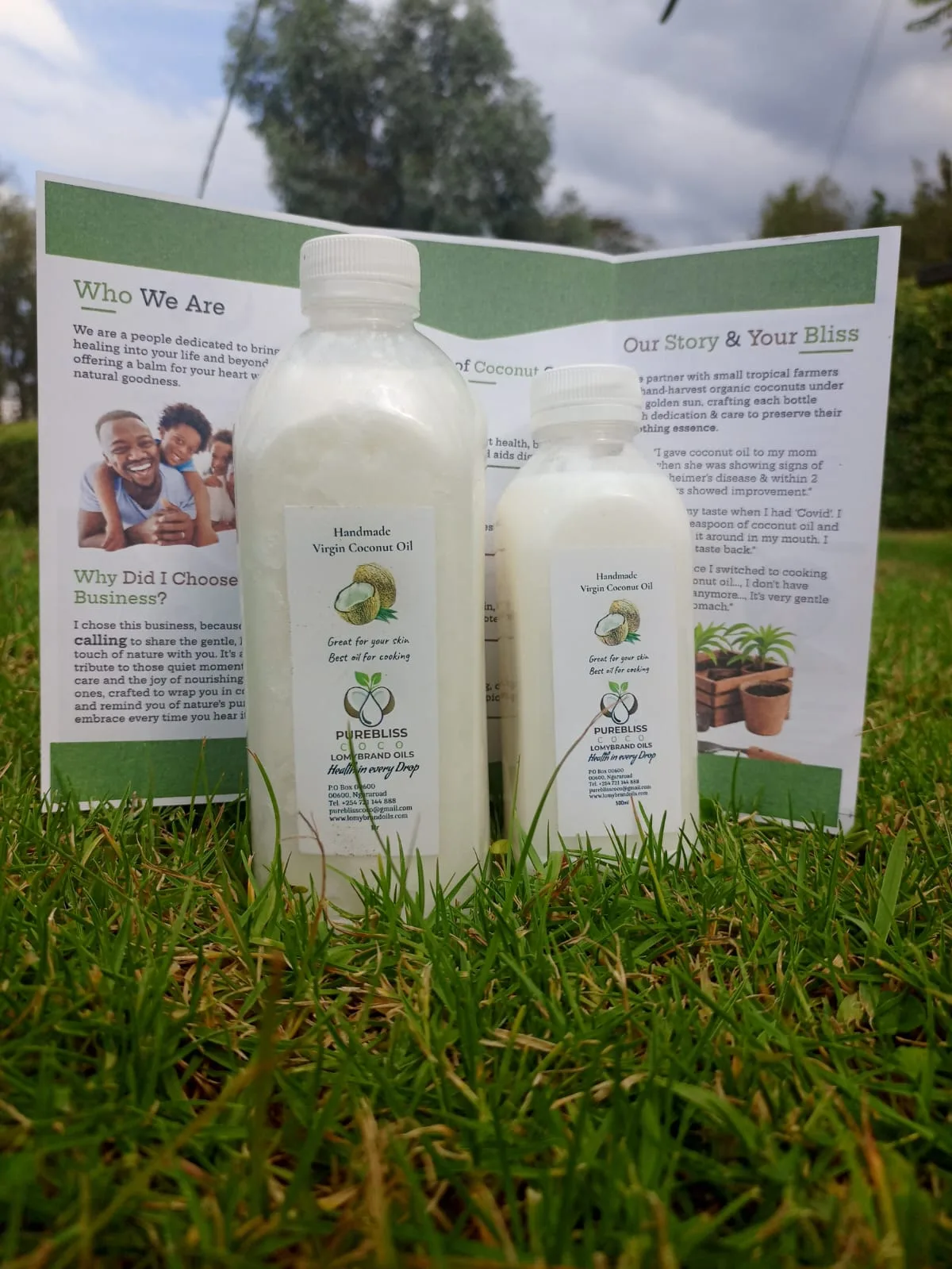
Not the factory jar with its impressive-sounding claims. Not the industrial product dressed in natural language. The actual thing — small-batch, handmade, from fresh coconuts, the way oil was made before oil became a commodity.
There is someone you can call directly.
Lomnyak Nabaala 📞 +254 721 144 888
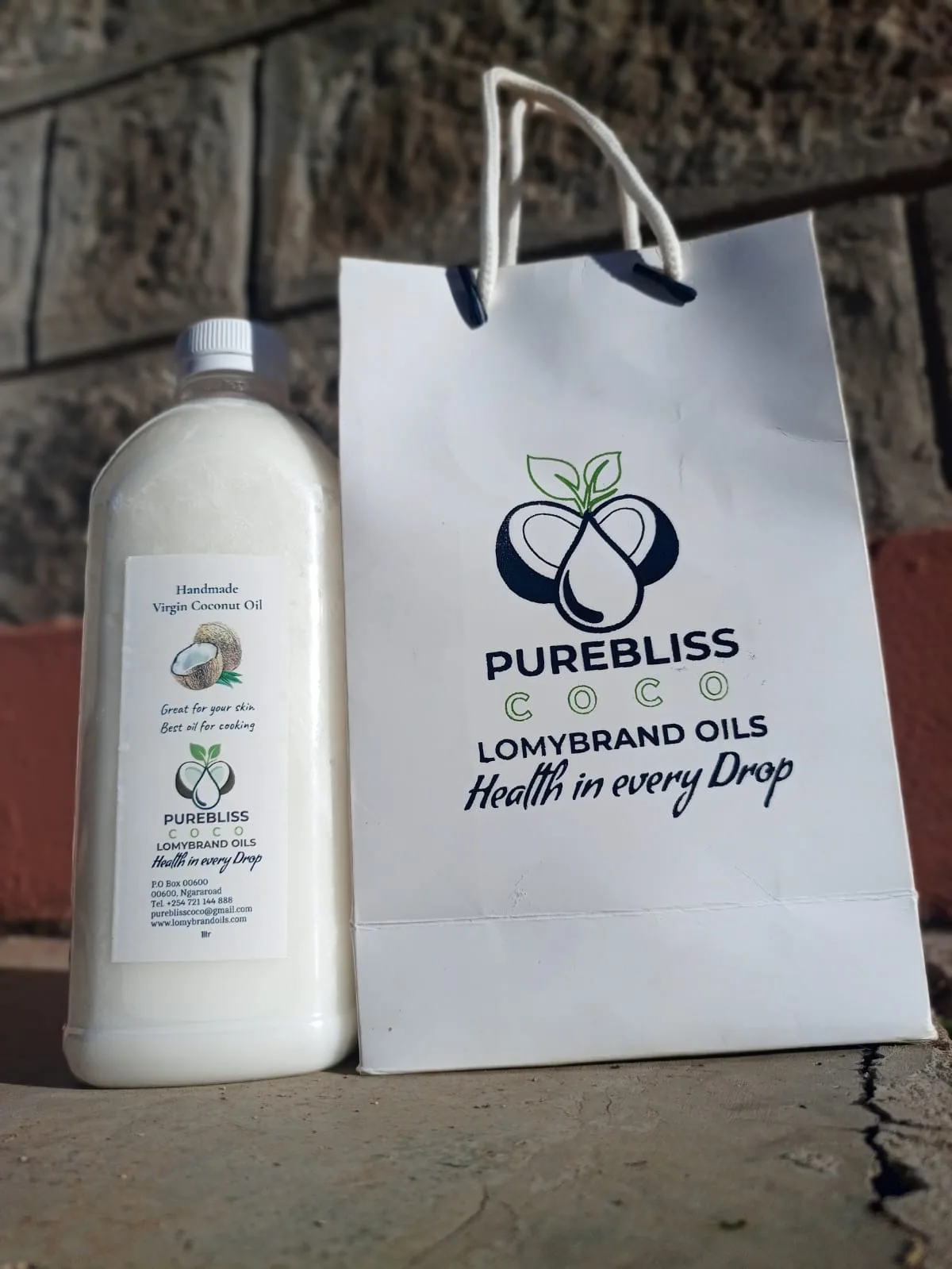
This is not a brand. Not a shelf product. This is someone who makes coconut oil the way it should be made — from fresh coconuts, by hand, in small batches where each one is actually paid attention to. You can ask questions. You can ask about the process, the sourcing, the shelf life, how to use it in your specific kitchen for your specific cooking. That is the difference between buying oil and knowing your oil.
The Walk That Started All of This
You are still walking faster than usual.
But now you know exactly why.
Because something small changed in a quiet hall on a Sabbath afternoon — something that does not sound large when you describe it to someone else (I heard a talk about cooking oil) but is actually quite large when you sit with it. Because the body you live in is not borrowed. It is the one you have for the entire journey. And the choices you make for it, quietly, without drama, in an ordinary kitchen on ordinary mornings, accumulate into something that is not ordinary at all.
They accumulate into your health.
Into your energy.
Into whether those arteries — the ones on the slide, the first image and the second image — look more like one or more like the other twenty years from now.
The speaker said it without trying to make it memorable.
But it was.
What you cook with becomes part of what flows through you.
You are walking faster because you believe her.
And because now you know exactly what to do about it.
For real handmade coconut oil made from fresh coconuts without industrial processing, contact Lomnyak Nabaala on +254 721 144 888