There is a jar sitting somewhere in your kitchen right now.
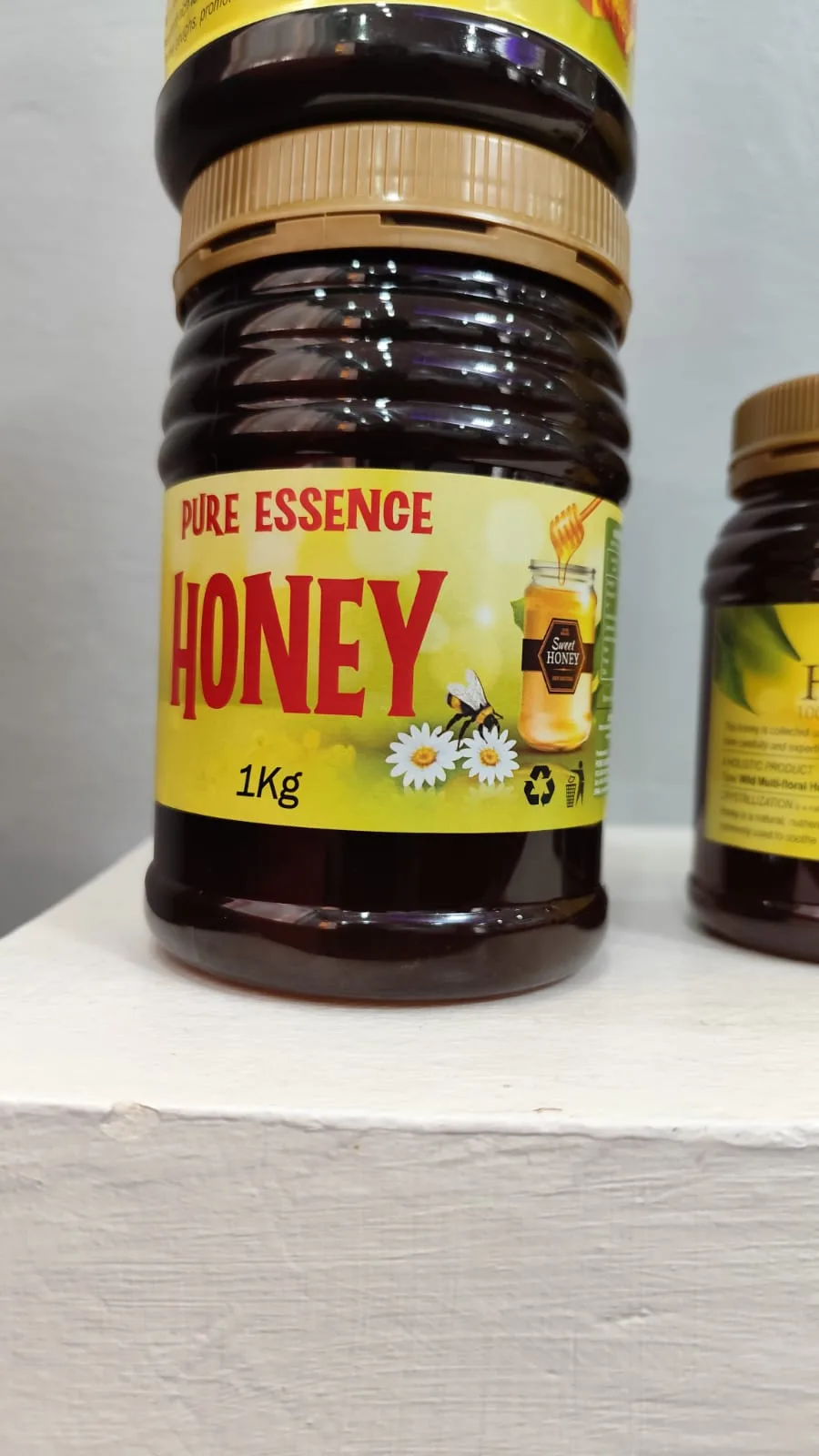
Or there was one recently. Amber coloured. Thick. The kind that moves slowly when you tilt the jar not rushing, not urgent, just a steady, confident pour that feels like it has nowhere to be and all the time in the world to get there.
You have been eating honey your entire life.
On your porridge in the morning. Stirred into your tea when you have a sore throat. Spread on bread. Added to a warm drink when the cough has been stubborn for three days and the pharmacy syrup has not worked as well as your grandmother's remedy. You have been eating it without thinking much about it because it has always just been there — natural, sweet, good.
But here is what you have probably never stopped to think about.
That jar contains something that should not exist.
Not in a bad way. In a miraculous way.
Honey is a substance that a small insect — weighing approximately one-tenth of a gram, with a brain the size of a sesame seed — produces through a process so complex, so chemically sophisticated, so precisely engineered that modern food science has spent decades trying to understand it and still cannot fully replicate it.
Honey is the only food produced by an insect that human beings eat.
It is the only natural food that never expires. Archaeologists excavating ancient Egyptian tombs have found sealed jars of honey over three thousand years old — and the honey inside was still perfectly edible.
It contains over 180 different chemical compounds.
It has been used as medicine, as food, as a preservative, as a wound dressing, as a religious offering, and as currency in ancient trade.
And your body processes it in a way that is so fundamentally different from how it processes the white sugar you stir into your tea that the comparison between them is not really a comparison between two sweeteners.
It is a comparison between medicine and poison dressed up in similar clothes.
Let us talk about all of it.
Starting with the bee.
Inside the Hive — How Bees Make Honey
To understand honey you need to understand what it costs to make it.
Not in money. In effort. In distance. In time. In the extraordinary collective intelligence of a creature that most of us swat away without a second thought.
A single honeybee visits between 50 and 100 flowers on a single foraging trip.
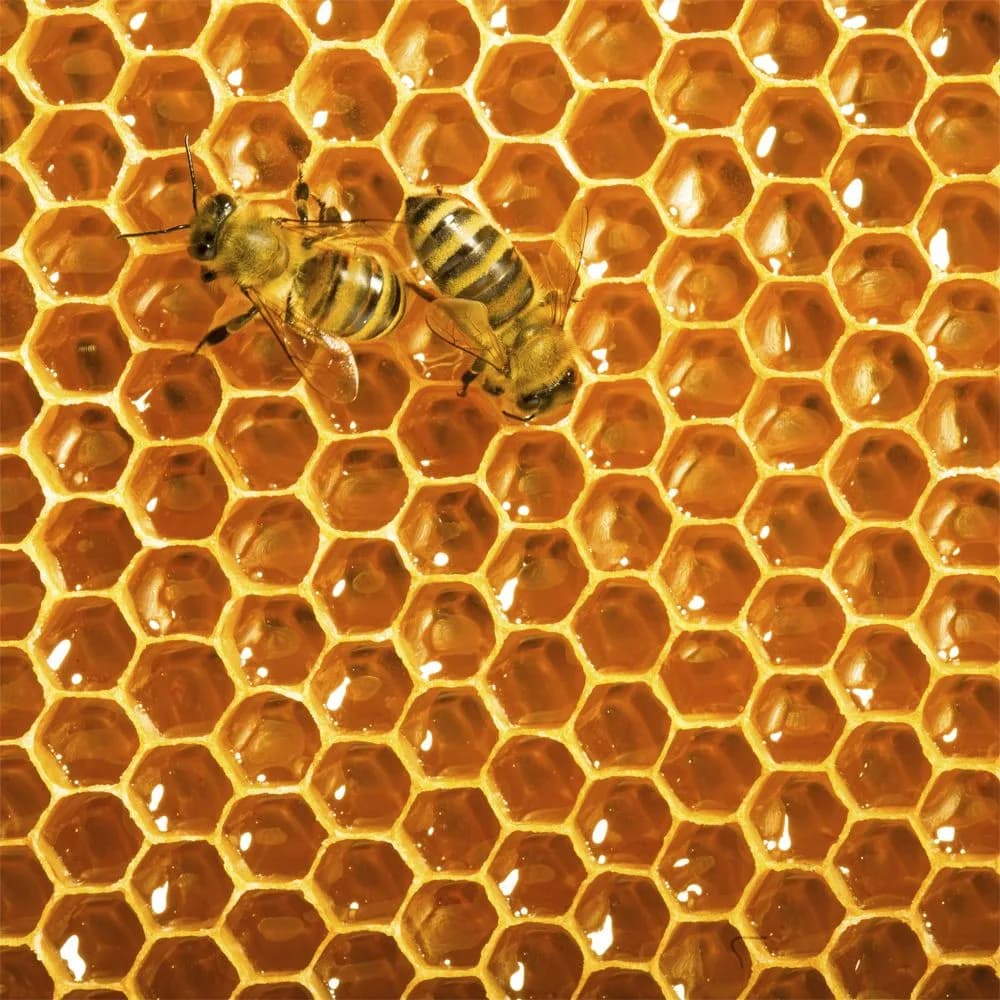
She and it is almost always a she, a worker bee flies out from the hive in the morning in a search pattern that covers up to five kilometres in radius. She is looking for flowers. Specifically for the sweet liquid produced deep inside the flower's petals called nectar. Nectar is the flower's way of attracting pollinators — a trade, essentially. Come drink this sweet reward and in exchange carry my pollen to the next flower.
The bee lands on a flower. She extends a long, tube-like tongue called a proboscis and draws the nectar up, storing it not in her stomach but in a special second stomach called the honey stomach or crop — a separate compartment specifically designed for honey production, completely distinct from her digestive stomach.
When her honey stomach is full — holding approximately 40 milligrams of nectar, roughly a full load for her tiny body — she returns to the hive.
But here is where the remarkable part begins.
The Transformation Inside the Hive
When the forager bee arrives back at the hive, she does not simply deposit the nectar somewhere. She finds another bee — a processor bee — and transfers the nectar mouth to mouth. The processor bee chews the nectar. Not to eat it. To process it.
During this chewing process something extraordinary happens.
The bee adds enzymes from her salivary glands to the nectar. The most important of these is an enzyme called invertase — also known as sucrase. Invertase breaks down the primary sugar in nectar (sucrose, which is the same double-sugar molecule found in your table sugar) into two simpler sugars: glucose and fructose.
This enzymatic breakdown is the first critical step that separates honey from simple sweetness.
But the enzyme conversion is only part of what happens.
The processor bee also adds another enzyme called glucose oxidase. When glucose oxidase acts on the glucose in honey it produces two byproducts: gluconic acid — which gives honey its slight acidity, a pH of approximately 3.9, which is acidic enough to prevent most bacterial growth — and hydrogen peroxide — a natural antimicrobial compound that is one of the reasons honey has been used for millennia as a wound dressing.
The processor bee passes the partially processed nectar to another bee. That bee processes it further and passes it on again. This chain of mouth-to-mouth transfer and enzymatic processing can involve dozens of bees before the nectar is ready for the next stage.
Removing the Water
Fresh nectar is approximately 70 to 80 percent water.
Honey, in its finished form, is approximately 17 to 20 percent water.
The bees need to remove an enormous amount of water from the nectar before it becomes honey. They do this through a process of collective evaporation that is one of the most impressive examples of cooperative engineering in the natural world.
The partially processed nectar is spread across the surface of empty honeycomb cells — thin, shallow layers that maximise surface area for evaporation. Worker bees then fan the honeycomb vigorously with their wings, creating airflow across the nectar surfaces that accelerates evaporation.
The hive maintains a specific internal temperature — approximately 35 degrees Celsius — which also aids evaporation without damaging the enzymes and volatile compounds in the nectar.
This fanning process continues day and night. Shifts of bees fan continuously. The water content drops steadily — from 80% down to 50%, then 40%, then 30%, then finally to the target of below 20%.
When the water content drops below 20% something critical occurs. The sugar concentration becomes high enough that almost no microorganism can survive in it. The solution becomes osmotically hostile to bacteria and fungi — it draws water out of any microbial cell that contacts it, dehydrating and killing it.
At this point the honey is sealed.
A worker bee secretes fresh beeswax from glands on the underside of her abdomen — white, clean, pliable — and uses it to cap the honeycomb cell completely. The honey inside is now sealed from the air. Protected from moisture. Preserved indefinitely.
This is the honey that has lasted three thousand years in Egyptian tombs.
How Far Does a Bee Travel to Make One Jar of Honey?
To produce a single kilogram of honey, bees collectively fly approximately 90,000 kilometres.
That is more than twice the circumference of the earth.
A worker bee produces, in her entire lifetime of approximately six weeks, approximately one-twelfth of a teaspoon of honey.
One teaspoon of honey represents the entire lifetime production of twelve bees.
The next time you stir honey into your tea, pause for a moment.
Twelve lifetimes went into that spoon.
What Is Inside Honey — The Chemistry of a Miracle
The chemical complexity of real honey is one of the reasons it cannot be accurately synthesised in a laboratory.
It contains over 180 different compounds. Here are the most important ones and what they do in your body.
The Sugars — But Not the Way You Think
Honey is approximately 80% sugar by weight. But the sugars in honey are not the same as the sugar in your sugar tin, and how your body handles them is completely different.
The primary sugars in honey are fructose (approximately 38%) and glucose (approximately 31%). These are monosaccharides — single sugar molecules that require no further digestion. They are absorbed directly through the wall of your small intestine without any additional enzymatic processing.
Fructose in honey is absorbed slowly. It travels to the liver and is metabolised gradually. It does not cause the sharp spike in blood glucose that refined sugar causes.
Honey also contains over 25 different oligosaccharides — complex sugars that act as prebiotics in your gut. They are not digested by your own enzymes. Instead they pass into your large intestine and feed the beneficial bacteria living there — the bacteria responsible for immune function, mental health (via the gut-brain axis), inflammation control, and dozens of other critical processes.
Honey is feeding your microbiome with every teaspoon.
Refined sugar does the opposite. It feeds the harmful bacteria and yeasts — particularly Candida species — that compete with your beneficial microbiome.
The Enzymes
We have met invertase and glucose oxidase already.
Honey also contains diastase (amylase) — an enzyme that helps break down starch, reducing the digestive burden on your pancreas.
And catalase — an enzyme that breaks down hydrogen peroxide into water and oxygen, preventing the accumulation of oxidative compounds in your tissues.
These enzymes are destroyed by heat. This is critical and we will return to it when we talk about processing.
The Antioxidants
Real honey is rich in phenolic compounds and flavonoids — plant-derived antioxidants that your body uses to neutralise free radicals.
Free radicals are unstable molecules produced by normal metabolic processes, by pollution, by radiation, by stress. They damage DNA, cell membranes, and proteins — contributing to ageing, cancer, cardiovascular disease, and neurodegenerative conditions.
The antioxidant capacity of honey varies significantly by type and source. Darker honeys — buckwheat honey, forest honey, manuka honey — contain significantly more antioxidants than lighter varieties. But all real, unprocessed honey contains meaningful quantities of these compounds.
The Antimicrobial Compounds
Honey kills bacteria.
This is not folk medicine. This is established science. The mechanism involves multiple factors working together.
The low pH (high acidity) of honey creates an environment hostile to most bacteria.
The low water content draws water osmotically out of bacterial cells.
The hydrogen peroxide produced continuously by glucose oxidase has direct antimicrobial activity.
Bee defensin-1 — a protein secreted by the bee's salivary glands during honey production — is a natural antimicrobial peptide with broad-spectrum activity against bacteria and fungi.
Methylglyoxal (MGO) — found in particularly high concentrations in Manuka honey from New Zealand — is a potent antimicrobial compound that even kills antibiotic-resistant bacteria including MRSA (Methicillin-resistant Staphylococcus aureus).
Honey has been used as a wound dressing in clinical settings — applied directly to infected wounds, burns, and surgical incisions — with documented clinical outcomes that rival some pharmaceutical antibiotics.
This is not a supplement.
This is a medicine.
Honey vs Refined Sugar — The Difference Is Not Just Sweetness
You already know that too much sugar is bad for you.
But the conversation about sugar versus honey goes much deeper than most people realise. It is not just about which one has fewer calories. It is about what each one does to your body at the biological level.
Let us compare them side by side.
Refined Sugar — What It Actually Is
The white crystalline substance you call sugar — sucrose — is extracted from either sugar cane or sugar beet through a process that involves crushing the plant, extracting the juice, purifying it with lime (calcium hydroxide), filtering it through activated carbon and bone char (the charred bones of cattle, used in some refineries to achieve the bright white colour), then concentrating it by evaporation and centrifugation until the pure sucrose crystals form.
The end product is chemically pure sucrose. Nothing else.
No vitamins. No minerals. No enzymes. No antioxidants. No prebiotic fibres. No antimicrobial compounds.
Just sucrose — two sugar molecules bonded together. When you eat it, your digestive enzymes split the sucrose into glucose and fructose, both of which flood your bloodstream rapidly.
What Refined Sugar Does to Your Body
The Blood Sugar Spike
Refined sugar causes a rapid, dramatic rise in blood glucose — what you feel as a sudden burst of energy approximately 15 to 30 minutes after eating something sweet. Your pancreas responds by releasing a large surge of insulin to move all that glucose out of your bloodstream and into your cells.
The glucose is cleared rapidly. Blood sugar crashes. You feel tired, irritable, hungry again within an hour or two. You reach for something sweet again.
This cycle — spike, crash, spike, crash — repeated day after day, year after year, is one of the primary drivers of type 2 diabetes. The pancreas becomes exhausted from continuous overproduction of insulin. The cells become resistant to insulin's signal. Blood glucose stays chronically elevated. Organs are damaged.
The Inflammation Response
High sugar consumption is one of the strongest dietary drivers of systemic inflammation. Refined sugar feeds the harmful gut bacteria that produce inflammatory compounds. It promotes the production of advanced glycation end products (AGEs) — damaged proteins formed when sugar attaches to proteins in your body, which are associated with accelerated ageing, cardiovascular disease, kidney damage, and neurological deterioration.
The Empty Calorie Problem
Your body requires vitamins and minerals to metabolise sugar. When you eat refined sugar — which contains zero vitamins or minerals — your body has to pull the required cofactors from its own reserves. Over time, a high-sugar diet actually depletes your body of the minerals needed to process it. You are running a deficit. Your body is spending resources it does not get back.
The Addiction Mechanism
Refined sugar activates the dopamine reward pathway in the brain — the same neural circuit activated by addictive drugs. Studies using brain imaging technology have shown that sugar consumption produces patterns of brain activation that are nearly identical to those produced by cocaine in terms of the dopamine circuits involved.
The food industry knows this.
The product is engineered to be consumed at a level beyond what your body can healthily process.
What Honey Does Instead
When you eat real honey your blood glucose rises — but more slowly. The fructose component is processed by the liver gradually. The glucose component enters circulation, but the lower glycaemic response means a smaller insulin surge. The oligosaccharides in honey actually slow the absorption of the sugars further.
Real honey has a glycaemic index of approximately 50 to 58. White sugar has a glycaemic index of 65 to 80 depending on the form.
Honey adds antioxidants to your bloodstream. It reduces the markers of inflammation. It feeds your beneficial gut bacteria. It provides small but meaningful amounts of vitamins including B vitamins, vitamin C, and minerals including calcium, magnesium, potassium, phosphorus, zinc, selenium, and iron.
It kills harmful bacteria in your digestive tract even as it feeds the beneficial ones.
And for people managing blood sugar — research published in multiple peer-reviewed journals has shown that replacing refined sugar with natural honey in the diet reduces fasting blood glucose, reduces haemoglobin A1c (the three-month blood sugar average used to monitor diabetes), and reduces LDL cholesterol — the bad kind that builds up on artery walls — while increasing HDL — the good kind that clears it.
Honey is sweet. So is sugar.
But they are not the same substance and they do not do the same things in your body.
Choosing one over the other is not just a preference.
It is a health decision.
What the Bible Says About Honey
This should not surprise you — that the Bible speaks about honey specifically and positively.
"How sweet are your words to my taste, sweeter than honey to my mouth!" — Psalm 119:103
"My son, eat honey, for it is good, and the drippings of the honeycomb are sweet to your taste." — Proverbs 24:13
"Pleasant words are a honeycomb, sweet to the soul and healing to the bones." — Proverbs 16:24
The Promised Land was described — repeatedly, emphatically — as a land "flowing with milk and honey." Not flowing with refined sugar. Not flowing with artificial sweeteners. Honey.
John the Baptist lived in the wilderness eating locusts and wild honey (Matthew 3:4). Not white sugar. Wild honey — straight from the comb, unprocessed, raw.
Jonathan in 1 Samuel 14 ate wild honey during a battle and the text says his eyes were brightened. The Hebrew phrase used implies a physical restoration of energy and clarity.
God's people were always pointed toward this substance.
There was a reason.
The Difference Between Commercial Honey and Raw Honey — What Happens to Honey After the Hive
Here is what most people do not know about the honey they are buying.
Most commercial honey sold in supermarkets — including large, well-known brands — has been heated, filtered, and processed in ways that remove much of what makes honey medicinal.
Pasteurisation — heating honey to 70 degrees Celsius or above — is done by commercial producers to prevent crystallisation (consumers mistakenly think crystallised honey has gone bad), to kill wild yeast cells that could cause fermentation, and to make the honey flow more easily through bottling equipment.
The problem: the enzymes in honey — invertase, glucose oxidase, diastase, catalase — are proteins. Proteins are denatured (destroyed) by heat above 40 degrees Celsius. Pasteurised honey has lost most or all of its enzyme activity.
No active enzymes means no continuous hydrogen peroxide production. No hydrogen peroxide means the antimicrobial properties are significantly reduced. The prebiotic oligosaccharides may also be partially broken down. The volatile aromatic compounds — responsible for the flavour complexity of real honey — are driven off by heat.
Ultra-filtration — passing honey through extremely fine filters under high pressure — removes the pollen from honey. Commercially, this is done to make honey look clearer and to prevent crystallisation further.
Pollen is one of the most nutritionally dense natural substances on earth. It contains protein, vitamins, minerals, enzymes, and flavonoids. It is also the primary way honey is traced back to its botanical origin — the type of flowers the bees visited. Without pollen, honey cannot be verified as genuine.
In 2011 an investigation by the Food Safety News in the United States found that 76% of honey sold in supermarkets had all the pollen removed. Food safety regulators in Europe state that honey with all its pollen removed cannot legally be called honey. It is, by that standard, an adulterated product.
And one more thing.
Honey adulteration — the addition of cheap sugar syrups including high-fructose corn syrup, rice syrup, and cane sugar syrup to commercial honey — is one of the most common food fraud practices globally. The World Honey Market is estimated to be worth over 9 billion US dollars annually. The profit motive for adulteration is enormous.
Studies testing commercial honey samples from multiple countries have found adulteration rates of between 30 and 70 percent depending on the market.
What this means practically: the jar you picked up at the supermarket that says pure natural honey on the label may contain a significant proportion of sugar syrup that you are paying honey prices for.
Your body knows the difference even if the label does not tell you.
How to Tell Real Honey From Fake Honey at Home
Before we talk about where to get the real thing, here are simple tests you can do at home right now with the jar you already have.
The Water Test
Fill a glass with room-temperature water. Take a teaspoon of your honey and drop it into the water without stirring.
Real honey is dense and holds together. It will sink to the bottom of the glass and sit there, maintaining its shape for several seconds before it slowly begins to dissolve. You can see it as a thick mass sitting on the glass floor.
Adulterated honey or sugar syrup dissolves almost immediately. It disperses through the water within seconds of contact.
The Bread Test
Spread honey on a slice of bread.
Real honey is absorbed slowly. The bread stays mostly firm. After several minutes the honey has penetrated the surface but the bread maintains its structure.
Fake honey or high-moisture honey soaks into the bread rapidly, making it soggy almost immediately. The bread softens and collapses.
The Crystallisation Test
Real honey crystallises naturally over time — particularly in cooler temperatures. The glucose component of honey naturally forms crystals when stored.
This is not a sign that honey has gone bad. It is a sign that it is real.
Commercial honey that has been ultra-filtered and processed rarely crystallises because the pollen particles that serve as nucleation sites for crystal formation have been removed. If your honey has been sitting in your cupboard for months and remains perfectly clear and liquid in a cool environment, this may indicate processing that removed the natural pollen.
Crystallised honey can be returned to liquid form by placing the jar in a bowl of warm (not hot) water — never microwave honey, as this destroys the enzymes completely.
The Flame Test
Dip a matchstick in your honey. Let it absorb for a moment. Then try to light it.
Real honey, due to its low moisture content, is flammable enough that a honey-dipped matchstick will ignite.
Honey with high water content or adulterated honey will not ignite because the excess moisture prevents combustion.
The Thumb Test
Place a small drop of honey on your thumb.
Real honey stays in place. It is thick, viscous, and does not spread or drip easily.
Fake honey or diluted honey spreads quickly and drips off your thumb within seconds.
The Health Benefits of Real Honey — What Research Has Confirmed
For your immune system: The antimicrobial compounds in real honey — particularly hydrogen peroxide and bee defensin-1 — actively suppress pathogens in your respiratory and digestive tracts. A clinical study published in the Archives of Pediatrics and Adolescent Medicine found that buckwheat honey outperformed dextromethorphan (the active ingredient in commercial cough syrups) in reducing nighttime cough severity and improving sleep quality in children.
For your digestive system: The prebiotic oligosaccharides in honey selectively feed beneficial bacteria — particularly Lactobacillus and Bifidobacterium species — while suppressing Helicobacter pylori (the bacteria responsible for most stomach ulcers). Studies have shown that regular consumption of raw honey reduces H. pylori colonisation significantly.
For your skin: Applied topically, honey draws moisture to the skin through its hygroscopic properties (its ability to attract and hold water from the environment). Its antimicrobial properties prevent bacterial colonisation of the skin surface. Its antioxidants reduce oxidative damage. Clinical studies have documented honey's effectiveness in treating atopic dermatitis (eczema), acne, burns, and chronic wounds that have failed to respond to conventional treatments.
For your cardiovascular system: Multiple studies have demonstrated that replacing refined sugar with natural honey reduces LDL cholesterol and triglycerides while raising HDL cholesterol. The antioxidants in honey reduce oxidative modification of LDL particles — the specific process that makes LDL dangerous (it is oxidised LDL, not LDL itself, that initiates arterial plaque formation).
For your energy: The combination of glucose and fructose in honey provides a more sustained energy release than refined sugar. Athletes have used honey as a carbohydrate source for performance fuelling with results comparable to commercial sports gels — without the artificial colours, preservatives, and flavours.
For sleep: Raw honey consumed before bed slightly raises blood insulin, which facilitates the transport of tryptophan across the blood-brain barrier. Tryptophan is converted to serotonin in the brain, which is then converted to melatonin — the hormone that regulates sleep. A teaspoon of raw honey in warm water before bed supports natural melatonin production and improves sleep quality.
Where to Get Real, Pure, Raw Kenyan Honey
Everything we have discussed — the enzymes, the antimicrobial compounds, the prebiotic oligosaccharides, the antioxidants — is present in its full concentration only in honey that is:
Raw — never heated above 40 degrees Celsius.
Unfiltered — still containing natural pollen and propolis.
Pure — with no added sugar syrups or additives.
Locally sourced — from bees foraging on the diverse, natural flora of Kenyan landscapes, producing honey with a nutritional profile specific to this geography and these plants.
This honey exists.
It is being produced right here in Kenya by beekeepers who understand the difference between honey as a commercial product and honey as a natural medicine.
One such beekeeper is David Ng'ethe — a passionate Kenyan apiarist dedicated to producing pure, raw, unprocessed honey the way it was always meant to be made. No additives. No heating. No filtering that removes the pollen. Just honey, extracted carefully from the comb and bottled with the full spectrum of everything the bee put into it.
David supplies raw, natural Kenyan honey directly — bypassing the processing and adulteration risks of the commercial supply chain and getting the real product into your hands.
For enquiries about pure, raw, natural Kenyan honey:
📞 David Ng'ethe: +254 733 473452
Whether you are looking for honey for daily use, for medicinal applications, for skin care, for your family's health, or simply for the pure, complex, extraordinary taste of honey that has never been heated or diluted — reach out to David directly.
Tell him you read about honey and want the real thing.
Because after everything you have just read — you deserve exactly that.
One Last Thing Before You Close This Article
Go to your kitchen.
Find the honey you have right now the commercial jar, the supermarket brand, the one you bought without reading this article yet.
Do the water test. Right now. Drop a teaspoon into a glass of water and watch what happens.
Whatever you find — you now have the knowledge to make a better choice next time.
Because honey is not just a sweetener.
It is a three-thousand-year-old medicine that bees spend their entire lifetimes producing.
It deserves to be treated accordingly.
"Eat honey, my son, for it is good." — Proverbs 24:13
The Rose of Sharon app has a Health and Wellness devotional series covering God's original design for what we eat, how we live, and how we care for the bodies He gave us. Download it free on Android and iOS.
For pure, raw, natural Kenyan honey — contact David Ng'ethe directly: 📞 +254 733 473452